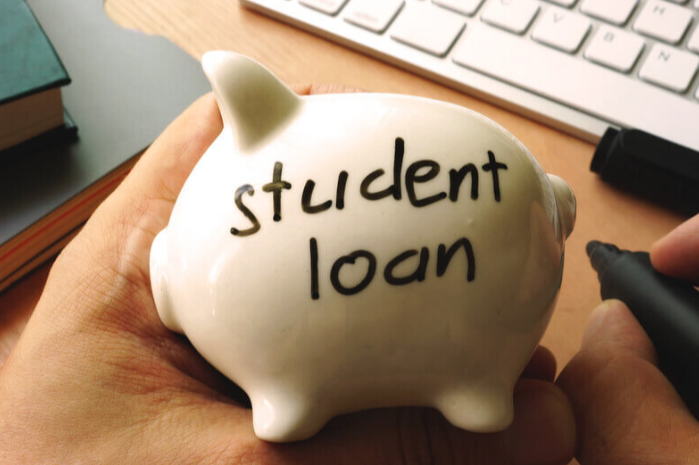

For many young people in India, financial independence often starts earlier than expected—especially when education costs, living expenses, or unexpected needs arise during college life. However, one major challenge remains consistent: most students do not have a steady income. This makes borrowing complicated, even in today’s digital-first lending environment. As more borrowers explore options like loan eligibility for unemployed students, understanding how lenders actually evaluate student applications becomes essential.
Unlike salaried applicants, students are assessed through a very different set of criteria. Instead of focusing on monthly income, lenders rely on indirect indicators such as academic enrollment, co-applicant strength, banking behavior, and early credit activity. This shift has made borrowing more accessible—but also more conditional.
Why Students Without Income Are Still Considered by Lenders
At first glance, lending money to someone without income may seem risky. However, modern financial systems evaluate potential rather than just current earnings.
For students, lenders often consider:
- Future earning potential based on education
- Family financial background
- Repayment support through co-applicants
- Digital financial activity
- Credit behavior, if any exists
This means that while income is missing, other signals help lenders estimate repayment capability.
The Core Idea Behind Eligibility for Students
Eligibility is not a fixed checklist—it is a risk evaluation model. For students, this model is adapted to reflect non-traditional income patterns.
Instead of asking “How much do you earn?”, lenders try to answer:
- Who will repay the loan if you cannot?
- How stable is your financial environment?
- Do you show responsible financial behavior?
- Is there any backup repayment structure?
This is why student loans often involve additional layers of verification compared to regular personal loans.
Role of Co-Applicants in Student Loan Eligibility
One of the most important factors for students without income is the co-applicant system.
A co-applicant is typically:
- A parent
- A legal guardian
- In some cases, a financially stable relative
Their role is critical because they provide:
- Proof of income stability
- Credit history backing
- Legal repayment responsibility
In most cases, approval becomes significantly easier when a co-applicant has:
- Stable employment
- Strong credit score
- Clean repayment history
Without this support, approval chances drop sharply for larger loan amounts.
Academic Status as a Financial Indicator
Unlike traditional borrowers, students are evaluated partly based on their education profile.
Lenders often look at:
- Type of course (technical, professional, general)
- Reputation of institution
- Duration of study
- Future employability of the field
For example, students in engineering, medical, or professional certification programs are often seen as lower-risk compared to undefined or informal study paths.
Banking Behavior Still Matters (Even Without Salary)
Even without income, students may still have financial activity through:
- Allowance deposits
- Scholarship funds
- Family transfers
- Freelance earnings
- UPI transactions
Lenders analyze this behavior to understand:
- Spending patterns
- Consistency of inflows
- Financial discipline
- Cash flow stability
Even small but regular activity can improve eligibility perception.
Credit History: The Hidden Advantage or Barrier
Students often assume credit history does not matter—but it does.
If a student has:
- Credit card usage
- Buy-now-pay-later accounts
- Small digital loans
Then repayment behavior is recorded and evaluated.
A positive history can significantly improve eligibility, while missed payments can create rejection risk—even for small loans.
Types of Loans Available for Students Without Income
Not all loans are structured the same way. Students without income typically fall into three borrowing categories:
1. Co-signed Personal Loans
These rely heavily on a financially strong co-applicant and are the most common option.
2. Education-Focused Loans
These are designed specifically for tuition or academic expenses and may offer:
- Moratorium periods
- Lower interest rates
- Flexible repayment timelines
3. Small Digital Loans
Some fintech platforms offer limited amounts based on:
- Basic KYC
- Mobile verification
- Transaction history
These are usually short-term and lower in value.
Why Eligibility Rules Are Strict for Students
Lenders maintain stricter eligibility rules for students for one primary reason: uncertainty of repayment timing.
Unlike salaried individuals:
- Students have no fixed monthly income
- Future employment is not guaranteed
- Financial dependency is often high
Because of this, lenders build safeguards such as:
- Co-applicants
- Lower loan limits
- Higher scrutiny of documents
- Automated risk scoring systems
Common Misconceptions About Student Loan Eligibility
Many students assume certain things that are not accurate.
Myth 1: Students cannot get any loan without a job
Reality: Loans are possible, but with conditions like co-applicants or limited amounts.
Myth 2: Only salary matters
Reality: Banking behavior and credit history also influence decisions.
Myth 3: Approval is guaranteed with a co-applicant
Reality: Co-applicant improves chances but does not guarantee approval.
Factors That Improve Eligibility Chances
Students can strengthen their eligibility over time by:
- Maintaining a basic savings account activity
- Building a small credit history responsibly
- Avoiding multiple loan applications at once
- Ensuring documents are consistent and updated
- Using financial products responsibly
These small habits build long-term financial credibility.
Why Digital Lending Has Changed Student Borrowing
Earlier, students without income had very limited access to credit. Today, digital systems have changed that by:
- Using alternative data for evaluation
- Automating risk assessment
- Reducing documentation barriers
- Allowing faster approval cycles
However, this also means decisions are more data-driven and less flexible in manual review.
Final Thoughts
Loan eligibility for students without income is no longer a complete barrier—but it is still a structured and risk-based system. Lenders compensate for the absence of income by analyzing academic background, co-applicant strength, financial behavior, and early credit activity.
For students, the key takeaway is simple: eligibility is built, not given instantly. Responsible financial habits, even at an early stage, can significantly improve future borrowing opportunities.
As digital lending continues to evolve, access to credit for students is expected to become more flexible—but the importance of financial discipline will always remain constant.