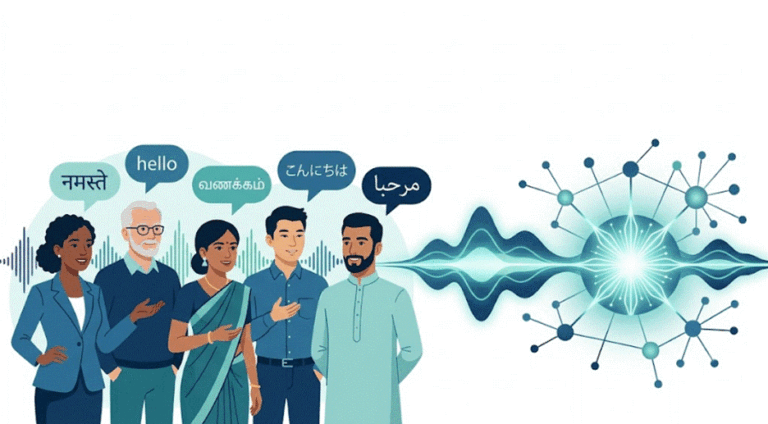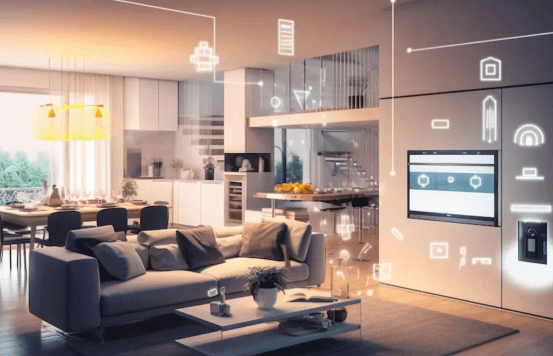

The future of intelligent living spaces hinges on real-time sensing and adaptive analytics. Homes will coordinate energy use, lighting, and climate with circadian-aware schedules. Privacy and security will be embedded by design, offering transparent consent and strong defaults. Personalization emerges from distributed data about routines and preferences, while accessibility remains a core constraint. The outcome is a human-centered environment that balances efficiency with autonomy, prompting questions about how control shifts as systems grow more perceptive.
What Are Intelligent Living Spaces Becoming?
As intelligent living spaces evolve, they are increasingly characterized by seamless integration of sensing, automation, and adaptive environments that anticipate human needs.
They converge toward distributed sensing networks, real-time analytics, and autonomous adjustments.
Future sensing informs design constraints and safety baselines, while ambient mood metrics guide subtle environmental shifts.
This data-driven trajectory preserves autonomy, enabling precise, transparent accommodations without sacrificing personal freedom.
Personalization at Home: How AI Reads Habits and Preferences
Personalization at home emerges from the systematic aggregation and analysis of behavioral signals, enabling AI to map daily routines, preferences, and context with high fidelity.
The approach emphasizes habit inference and preference mapping, translating data into adaptive thermostats, lighting, and schedules.
Privacy safeguards and accessibility design remain central, guiding scalable models that respect autonomy while supporting inclusive, user-centric environments.
Designing for Privacy, Security, and Accessibility
The design of privacy, security, and accessibility in intelligent living spaces builds on the data-informed personalization discussed previously by establishing guardrails that protect user autonomy while enabling adaptive functionality.
Data-driven safeguards propose privacy defaults and transparent ethical consent, while inclusive interfaces support diverse users.
Security auditing informs risk-aware adjustments, ensuring accessibility remains intact without compromising system integrity or personal freedom.
From Smarthome Gadgets to Human-Centered Environments
Predictions indicate homes optimize home energy usage through adaptive scheduling, granular efficiency metrics, and grid-responsive loads.
Ambient lighting becomes a data-enabled lever for circadian alignment, mood regulation, and energy savings, guiding autonomous spaces toward resilient, user-centric reliability.
See also: thegeissblog
Frequently Asked Questions
How Will AI Integrate With Aging-In-Place Living?
AI integration in aging-in-place scenarios will center on health monitoring and predictive wellness, enabling autonomous decision-support, proactive alerts, and personalized care coordination; data-driven systems empower users with freedom while balancing privacy, security, and transparent, explainable recommendations.
What Are the Costs and ROI of Intelligent Spaces?
Costs ROI for intelligent spaces vary widely; upfront hardware, installation, and ongoing maintenance matter, while savings from energy and caregiving efficiencies compound over time. Integration adoption hinges on interoperability, data privacy, and user training, influencing overall return and scalability.
Can Homes Predict Health Issues Before Symptoms Appear?
Homes may detect early health signals through predictive health analytics, yet this capability raises privacy tradeoffs, requiring transparent data governance. The analysis remains speculative but data-driven, emphasizing autonomy and freedom while evaluating risks, benefits, and individual control over shared health information.
How Is Data Ownership Shared Between Residents and Providers?
Data ownership is shared through resident consent and negotiated frameworks; a single resident’s anecdote of a consent form mirrors a dashboard’s governance, illustrating how data ownership boundaries evolve as providers clarify usage, rights, and transparent data-sharing policies.
Will Universal Design Influence Future Mainstream Features?
Universal design will influence future mainstream features by prioritizing accessibility, adaptability, and ease of use; data-driven projections suggest broad adoption across devices and environments, enabling inclusive autonomy while preserving user freedom in personalized, scalable solutions.
Conclusion
In the coming era, intelligent living spaces will harmonize data streams into adaptive comfort, governed by transparent consent and secure defaults. Precise analytics translate routines into nuanced environmental shifts, preserving autonomy while optimizing energy and accessibility. As systems learn, privacy-by-design becomes the baseline, not an option. The home transforms into a responsive organism—quiet, reliable, and human-centered—its behavior a symphony of signals guiding well-being. Like a lighthouse in a data fog, trust anchors every automatic adjustment.